
Pallet Racking for DC Metro Manufacturers and Government Contractors
10 min read · May 2026 · DC Pallet Racking Team
The Washington DC Metro area is unlike any other industrial market in the country. Alongside standard commercial and distribution warehousing, the region hosts an enormous concentration of defense contractors, federal agencies, cleared manufacturers, and precision technology firms — many of them operating warehousing and parts storage facilities with requirements that go well beyond what a standard racking installer can handle. This guide addresses what makes these environments different and how to approach racking design and installation for them.
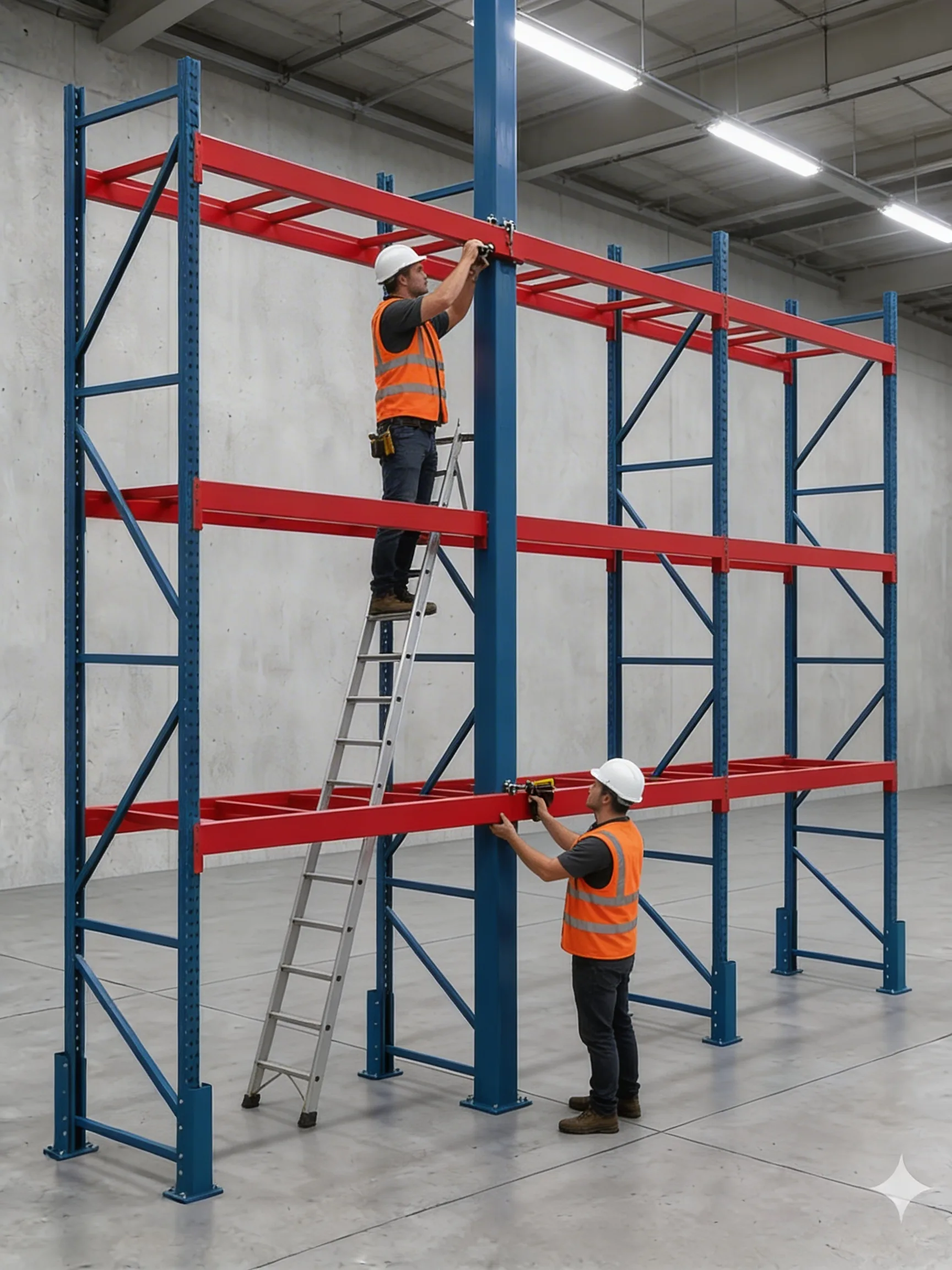
The DC Metro Contractor Warehouse Landscape
Northern Virginia — specifically the corridor running from Arlington through Tysons, Reston, Herndon, Chantilly, and out to Manassas — is the most concentrated defense and intelligence contracting market in the world. The companies operating here range from Fortune 50 primes (Leidos, SAIC, Booz Allen Hamilton, General Dynamics IT, Northrop Grumman) to hundreds of cleared small businesses supporting DoD, DHS, NSA, CIA, and other three-letter agencies.
These organizations maintain warehousing and parts storage for a wide range of materials:
- Mil-spec hardware, fasteners, and electronic components
- IT equipment — servers, networking gear, workstations — for classified and unclassified networks
- Sensitive but unclassified (SBU) materials requiring controlled access
- Government-furnished equipment (GFE) under property accountability programs
- Prototype and engineering development hardware
- Field service parts and MRO (maintenance, repair, and overhaul) inventory
ITAR and Cleared-Facility Racking Considerations
Facilities that handle ITAR (International Traffic in Arms Regulations) controlled materials or that operate within cleared facility boundaries have specific constraints that affect how racking projects are scoped and executed.
Personnel Access Requirements
Many cleared facilities in Northern Virginia require that any workers who access the facility — including racking installation crews — hold at minimum a Secret clearance, and in some cases Top Secret/SCI. Before contracting with any racking company for work in a cleared facility, the facility security officer (FSO) must verify that crew members can be granted visitor access under the applicable security protocols.
DC Pallet Racking works with cleared facilities throughout Northern Virginia. Our project management team is experienced in the visitor access request process and can coordinate directly with your FSO to ensure crew members are properly badged before any work begins.
SCIF-Adjacent Installations
Some contractor warehousing is physically adjacent to or shares a building with a Sensitive Compartmented Information Facility (SCIF). While the warehouse itself may not be classified space, its proximity to classified areas creates specific constraints:
- No wireless devices (some facilities prohibit cellular phones, tablets, and Bluetooth tools in the installation area)
- Tool inventory control — some SCIFs require that all tools brought into adjacent spaces be logged in and out to prevent accidental introduction into classified areas
- Noise and vibration restrictions during certain hours if sensitive work is occurring in adjacent spaces
- Photography restrictions — standard racking installation documentation (before/after photos, rack condition records) may be prohibited or restricted
Government Property Accountability
Contractors working under government contracts frequently store government-furnished equipment (GFE) that is under property accountability programs. Racking systems that hold GFE may need to be designed to support individual item segregation, lot traceability, or inspection access — requirements that influence bay width, beam level heights, and whether open wire decking or solid shelf surfaces are appropriate.
Manufacturing Workflow Racking: WIP, Raw Materials, and Finished Goods
DC Metro manufacturing facilities — including defense electronics manufacturers in Fairfax County, precision machine shops in Prince William County, and systems integration firms throughout the NoVA corridor — have racking needs that differ significantly from pure distribution warehouses. Manufacturing storage needs to support the production workflow, not just maximize pallet positions.
Raw Materials Storage
Raw materials — sheet metal stock, bar stock, electronic components, bulk hardware — require racking configurations that match the physical form of the material. Cantilever racking for long stock, bin shelving for loose components, and selective pallet racking for bulk materials may all coexist in the same facility. The design challenge is creating a logical flow from raw materials receiving through the production floor without creating cross-traffic that slows throughput.
Work-in-Process (WIP) Storage
WIP storage requires flexibility. Assemblies change size and weight as they move through production stages. Racking used for WIP should have adjustable beam heights, sufficient load capacity for the heaviest stage of assembly, and easy access for production workers — which typically means lower rack heights (under 8 feet) and wider beam spacing than finished goods storage.
Finished Goods and Staging
Finished goods awaiting shipment or inspection often benefit from higher-density storage than production floor WIP. Standard selective pallet racking with wire decking, organized by program or contract, is typical for defense contractor finished goods staging areas. Some facilities use gravity flow rack for FIFO serialized item management when lot traceability is a program requirement.
ESD and Static-Sensitive Storage Requirements
Many DC Metro defense electronics manufacturers and IT equipment handlers store electrostatic discharge (ESD) sensitive materials. Standard galvanized steel racking can accumulate static charges that damage sensitive components. ESD-sensitive storage areas may require:
- Grounded or conductive rack surfaces (ESD-safe shelf liners or conductive decking)
- Anti-static flooring in the racking area
- Proper bonding of rack frames to facility ground
- Restricted personnel access (only ESD-trained employees in static-sensitive storage areas)
These requirements should be identified during the warehouse design phase so the appropriate racking and accessories are specified from the outset.
Permitting and Compliance in Northern Virginia Contractor Markets
Arlington County and Fairfax County — where the highest concentration of cleared contractor facilities are located — both have active building permit requirements for commercial rack installations. In Arlington, installations above certain height and footprint thresholds require a building permit regardless of whether the facility is leased or owned by the tenant. Fairfax County has similar thresholds.
For defense contractor facilities, the permit process adds a layer of complexity because facility modifications often require review by the landlord's property management company, the building's structural engineer of record, and sometimes the government's contracting officer if the facility modification affects the lease terms of a government-occupied building.
DC Pallet Racking's installation team handles the full permitting process in Arlington, Fairfax, and throughout Northern Virginia. We coordinate directly with facility managers, government property officers, and county building departments to keep your project on schedule. Our work in Arlington VA specifically includes experience with the permit processes unique to that jurisdiction.
Project Scheduling for Active Government Facilities
One of the most practical challenges in contractor facility racking projects is scheduling. Active cleared facilities cannot simply be cleared out for a week-long installation. Operations may run 24/7 on some contracts. Some areas of the facility may be inaccessible during working hours due to classified work in progress.
DC Pallet Racking structures large contractor installations in phases designed around operational windows — evenings, weekends, or sectional shutdowns that minimize disruption to ongoing work. We've completed phased installations in active Tysons and Reston contractor facilities where no single area was taken out of service for more than one working day.
Call us at (240) 540-4372 to discuss the specific requirements of your contractor or manufacturing facility.
Racking for Government Contractor Facilities
We work with defense contractors, cleared manufacturers, and federal facility operators throughout Northern Virginia and the DC Metro area. Experienced with access requirements, phased installations, and government permitting processes.
Discuss Your ProjectReady to Optimize Your Warehouse?
Get a free estimate from DC Metro's warehouse racking experts. We serve warehouses of all sizes throughout the Washington, DC metro area.