Pallet Racking for DC Metro E-Commerce Fulfillment Centers
12 min read · May 2026 · DC Pallet Racking Team
The Washington DC metro area is one of the highest-income, highest-density consumer markets on the East Coast — and its e-commerce fulfillment market reflects that. From regional last-mile operators in Northern Virginia to same-day delivery hubs in Prince George's County, DC Metro fulfillment centers have racking requirements that differ in important ways from general merchandise distribution. This guide covers what operators need to know about racking for e-commerce in the DC metro area.
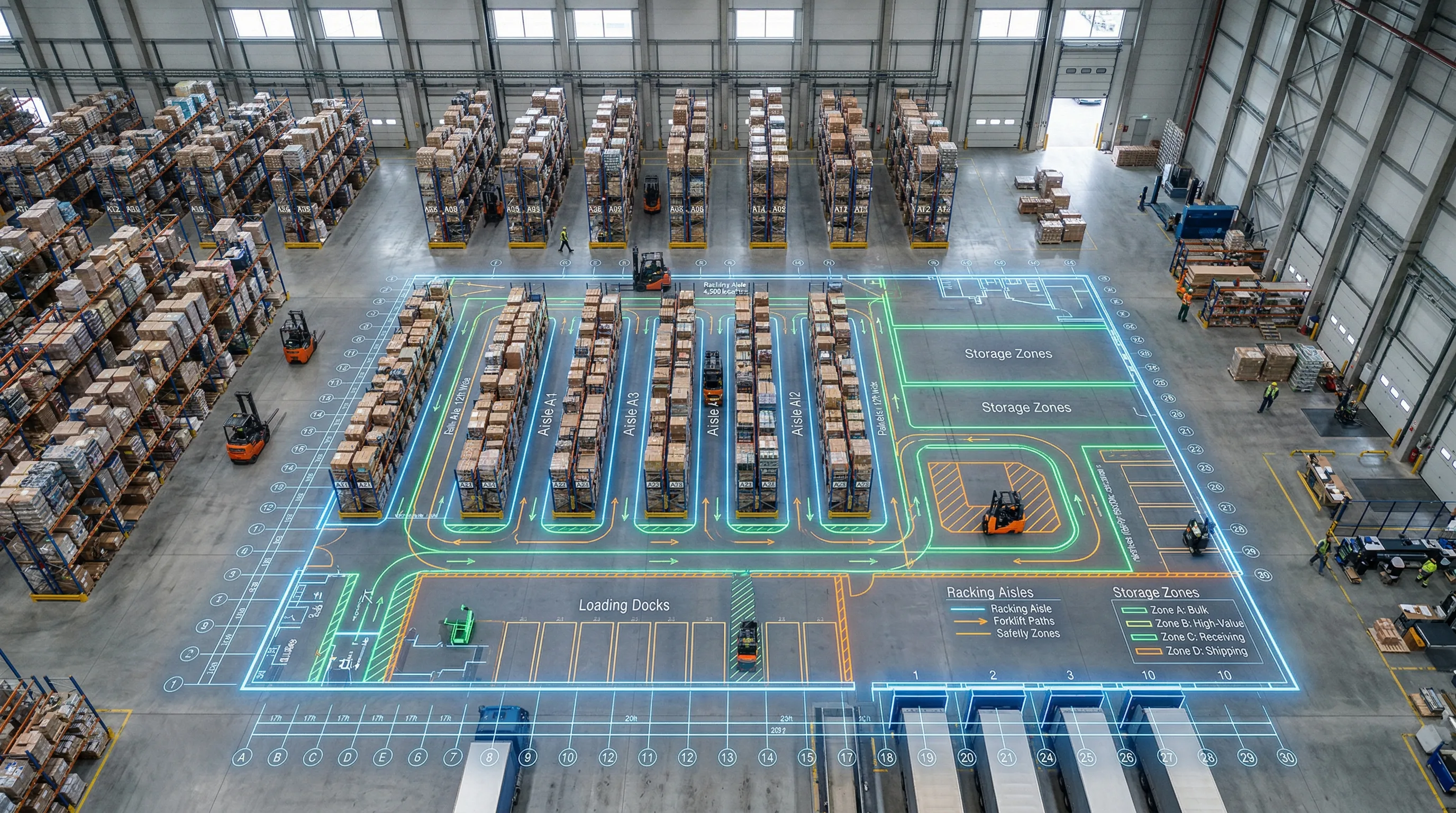
Fulfillment Center Specialists
DC Pallet Racking designs and installs racking systems for e-commerce and fulfillment operations throughout the DC metro area. We handle high-SKU selective rack, carton flow systems, and WMS-integrated layouts. Call (240) 540-4372 for a free consultation.
DC Metro E-Commerce Growth: Why This Market Is Different
The Washington DC metro area consistently ranks among the top US markets for e-commerce adoption, driven by several structural factors:
- High household income: The DC metro area has one of the highest median household incomes in the United States. High-income households over-index on e-commerce spending, particularly in premium grocery, fashion, electronics, and home goods categories.
- Federal government consumer base: The federal workforce — concentrated in DC, Northern Virginia, and suburban Maryland — represents a stable, high-volume consumer segment with consistent purchasing patterns.
- Dense population in a geographically compact area: The DC metro area packs about 6 million people into a relatively small geographic footprint. Same-day and next-day delivery commitments are commercially viable here in ways they aren't in more dispersed metros.
- Dual-submarket structure: The metro area's split between Virginia and Maryland creates two distinct logistics markets with different permit processes, different building stock, and different labor markets — which affects how fulfillment networks are structured.
The result is an e-commerce fulfillment market that demands racking systems capable of handling high SKU counts, fast picking operations, and frequent inventory reconfiguration.
Last-Mile Distribution Characteristics and Racking Implications
Last-mile distribution centers — the final-stop facilities before delivery to consumers — have specific characteristics that shape racking requirements:
- High throughput, lower storage density: Last-mile facilities turn inventory fast — days or even hours rather than weeks. The racking system needs to support rapid put-away and picking, not maximum cubic storage density. Wide aisles, clear sightlines, and logical pick path routing matter more than storage density.
- Smaller facility footprints: DC Metro last-mile facilities are often smaller than regional distribution centers — 30,000 to 150,000 square feet rather than 500,000+. Every square foot matters. Selective rack with efficient aisle layouts maximizes pick positions within a smaller envelope.
- Mixed carton and pallet operations: Last-mile facilities often receive product by the pallet but ship by the carton or individual unit. The racking system needs to support both pallet storage and carton-level picking from the same physical bay.
- Variable SKU count and velocity: Seasonal product mixes and promotional campaigns cause frequent changes in what's being stored and how fast it moves. Racking systems need to be reconfigurable — adjustable beam heights, interchangeable bays — to accommodate these changes without major reconstruction.
Northern Virginia vs. Maryland Fulfillment Centers: Key Differences
DC Metro fulfillment operators often face a choice of siting on the Virginia or Maryland side of the metro area. The decision has real implications for racking and facility design:
Northern Virginia Fulfillment
- Newer building stock with higher clear heights (28–36 ft) in Dulles and Route 28 corridors
- Fairfax LDS permit process — typically 2–3 week review
- Strong labor market with logistics workforce experience
- Higher industrial rents than Maryland
- Proximity to Dulles airport for air freight integration
- Virginia OSHA (VOSH) enforcement environment
Maryland Fulfillment
- Mix of older and newer building stock; I-95 corridor has good modern product
- County-level permits — Montgomery DPS or Prince George's PIE, typically 2–4 weeks
- Lower industrial rents on average versus Northern Virginia
- Port of Baltimore proximity for import-heavy inventory
- Maryland OSHA (MOSH) enforcement environment
- Good access to I-95 and I-495 for regional distribution
For operators serving the entire DC metro, a dual-site approach — one NoVA facility and one Maryland facility — is increasingly common for same-day fulfillment networks. We serve both sides of the metro with Northern Virginia racking services and Maryland county coverage.
Racking Systems for High-SKU E-Commerce Operations
High-SKU e-commerce fulfillment operations — those carrying thousands to hundreds of thousands of unique products — need racking systems designed around picking efficiency, not just storage density. The most relevant systems for DC Metro fulfillment centers:
Selective Pallet Rack
Selective rack is the backbone of most e-commerce fulfillment operations. Every pallet position is directly accessible from the aisle — no digging, no moving product to get to a specific SKU. For high-SKU operations, selective rack in single-deep configuration provides maximum SKU accessibility at the cost of storage density.
In DC Metro fulfillment centers, selective rack is typically installed in configurations optimized for fast picking — beam heights that allow easy hand or pick-stick access to lower levels while maintaining full pallet storage above. Fine-pitch beam spacing (every 3–4 inches) provides flexibility to reconfigure for changing product dimensions.
Carton Flow Rack
Carton flow (gravity flow) rack is one of the most effective systems for high-velocity, unit-level picking in e-commerce fulfillment. Cases are loaded from the back of the rack and slide forward on roller lanes as front positions are emptied. The result:
- First-in, first-out (FIFO) rotation without operator effort
- Picker always finds product at the front of the lane
- Replenishment can happen from the back while picking continues from the front
- Pick density per linear foot of aisle face is significantly higher than standard selective rack
Carton flow is particularly effective for fast-moving SKUs — the top 20% of a fulfillment center's SKU count that typically accounts for 80% of order volume. Designing a fulfillment layout that puts fast movers in carton flow and slow movers in selective rack dramatically improves pick path efficiency.
Double-Deep and Push-Back Rack
For fulfillment operations with high volumes of a smaller number of SKUs — think consumables, standard packaging materials, or proprietary products — double-deep or push-back rack provides better storage density than single-deep selective while maintaining reasonable pick accessibility. These systems work best when multiple pallets of the same SKU are stored in each lane.
WMS Integration Considerations for Racking Layout
Modern e-commerce fulfillment operations depend on Warehouse Management Systems (WMS) to direct put-away, picking, and replenishment. The physical racking layout needs to be designed in coordination with WMS requirements — not as an afterthought:
- Location labeling and barcode scanning: Every pick location needs a machine-readable location label. Rack configurations must accommodate label placement — typically on the beam face — with adequate clearance for scanner visibility. This affects beam face height and label position in the rack design.
- Pick path routing: WMS systems route pickers through the warehouse in patterns designed to minimize travel distance. The physical rack layout — aisle orientation, numbering convention, location numbering scheme — must align with the WMS routing logic. Discuss WMS requirements with your racking designer before finalizing the layout.
- Slotting flexibility: WMS-driven slotting (assigning SKUs to locations based on velocity, size, and pick frequency) requires a racking layout that can be reconfigured as slotting logic evolves. Adjustable beam heights and modular rack sections support ongoing slotting optimization.
- Integration with automation: Fulfillment operations using automated conveyor, sortation, or goods-to-person (GTP) systems need racking layouts that interface cleanly with the automation footprint. If automation is in your future, design the racking layout to accommodate it from day one.
Safety and Compliance in High-Traffic Fulfillment Environments
E-commerce fulfillment centers are among the highest-injury-rate warehouse environments — high worker density, fast operations, and mixed pedestrian/forklift traffic all contribute to elevated risk. Racking design can mitigate several key risk factors:
- Aisle width for mixed traffic: In fulfillment centers with both pedestrian pickers and forklift put-away operations, aisles need to accommodate safe passing distances. OSHA requires forklifts have at least 3 feet clearance beyond the widest load — but in active pedestrian environments, wider margins are appropriate.
- End-of-aisle guarding: High-traffic fulfillment operations put end-of-aisle rack positions at elevated forklift impact risk. Column guards and end-of-aisle barriers are not optional in these environments.
- Load capacity placards: OSHA requires load capacity placards on all rack bays. In fulfillment centers with high employee turnover, visible placards support consistent loading practices without supervisory oversight.
- Regular inspections: Fulfillment centers operate more intensively than typical warehouses — forklift traffic is higher, worker interactions with rack are more frequent, and impacts are more likely. Schedule formal inspections at least twice per year.
Designing Your DC Metro Fulfillment Racking System
The most common mistake in fulfillment center racking design is treating the racking system as a separate decision from the operational design. In a high-SKU, fast-turn fulfillment environment, the racking layout is part of the operations design — it shapes pick paths, worker density, replenishment workflows, and WMS configuration.
DC Pallet Racking provides full warehouse design and space planning services for fulfillment center builds and reconfigurations throughout the DC metro area. We work with your operations team to design a racking layout that optimizes for your specific SKU profile, order profile, and operational requirements — not just square footage.
Design Your DC Metro Fulfillment Center Racking
We design and install racking systems for e-commerce and fulfillment operations throughout Northern Virginia, suburban Maryland, and Washington DC. Call (240) 540-4372 for a free layout consultation.
Get a Free EstimateReady to Optimize Your Warehouse?
Get a free estimate from DC Metro's warehouse racking experts. We serve warehouses of all sizes throughout the Washington, DC metro area.